Handoff · IBM BOBathon
This case study covers internal work and is password protected. If you were given a password, enter it below.
That password is not quite right.
Need access? Email me.
This case study covers internal work and is password protected. If you were given a password, enter it below.
That password is not quite right.
Need access? Email me.
An AI-powered research synthesis tool that turns fragmented research into shared, actionable next steps
ProjectIBM BOBathon
RoleProduct Designer & Developer
TimelineJuly 2026
ToolsIBM BOB, watsonx, React, Carbon
Handoff demo: uploading research, synthesizing insights, and exporting action items.
Handoff is a collaborative research and meeting-intelligence tool for UX researchers, product managers, and developers. Teams can upload transcripts and notes, use AI to extract structured insights, work together in a shared project space, and export the results into the tools where work continues.
Built with three other designers during IBM BOBathon, Handoff uses IBM BOB and watsonx to surface action items, key decisions, pain points, and open questions from research documents and transcripts.
Teams collect user interviews, usability tests, surveys, and competitive analyses across a fragmented landscape of disconnected tools: recordings in Teams, notes in Mural, data in spreadsheets, and summaries in Box. When it is time to make decisions, someone has to hunt across sources, copy and reformat content, and rebuild context that already exists somewhere else.
We experienced this firsthand during our IBM intern project. Even with BOB helping us, synthesizing research gathered by the whole team slowed us down—not because the research did not exist, but because it was too fragmented and disconnected to reuse efficiently.
IBM Handoff does not replace a team’s existing tools; it makes them work together. It transforms research from one format into another, draws out themes and opportunities across multiple sources, and gives teammates a shared workspace where each contribution is immediately usable by everyone else.
The goal was to reduce the hours spent managing research so teams could spend more time acting on it.
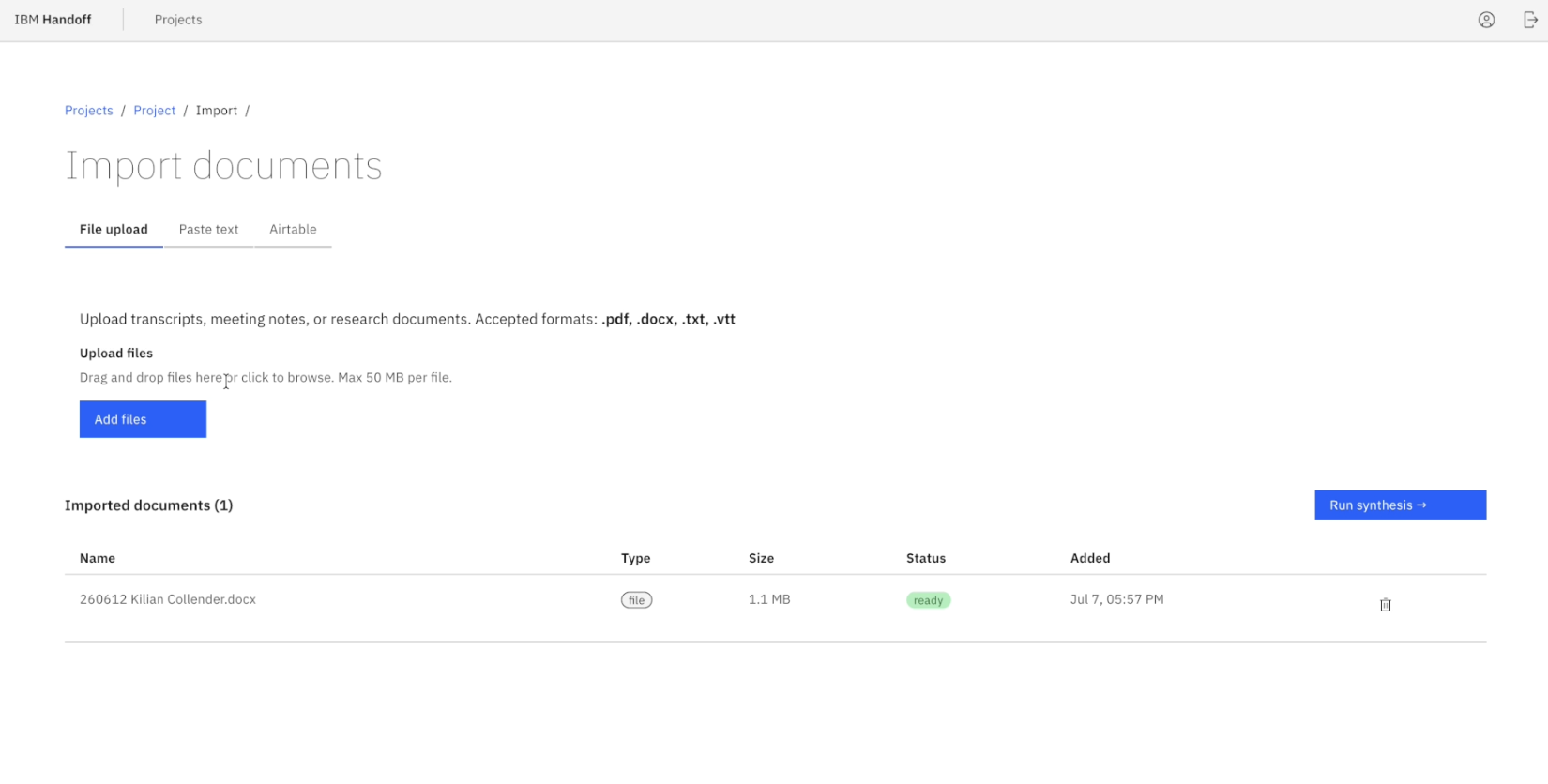
Upload PDF, DOCX, DOC, TXT, or paste raw notes directly.
Use AI to extract insights across documents and transcripts.
Edit, add, delete, copy, and review supporting evidence together.
Send tasks and reports into the next stage of project work.
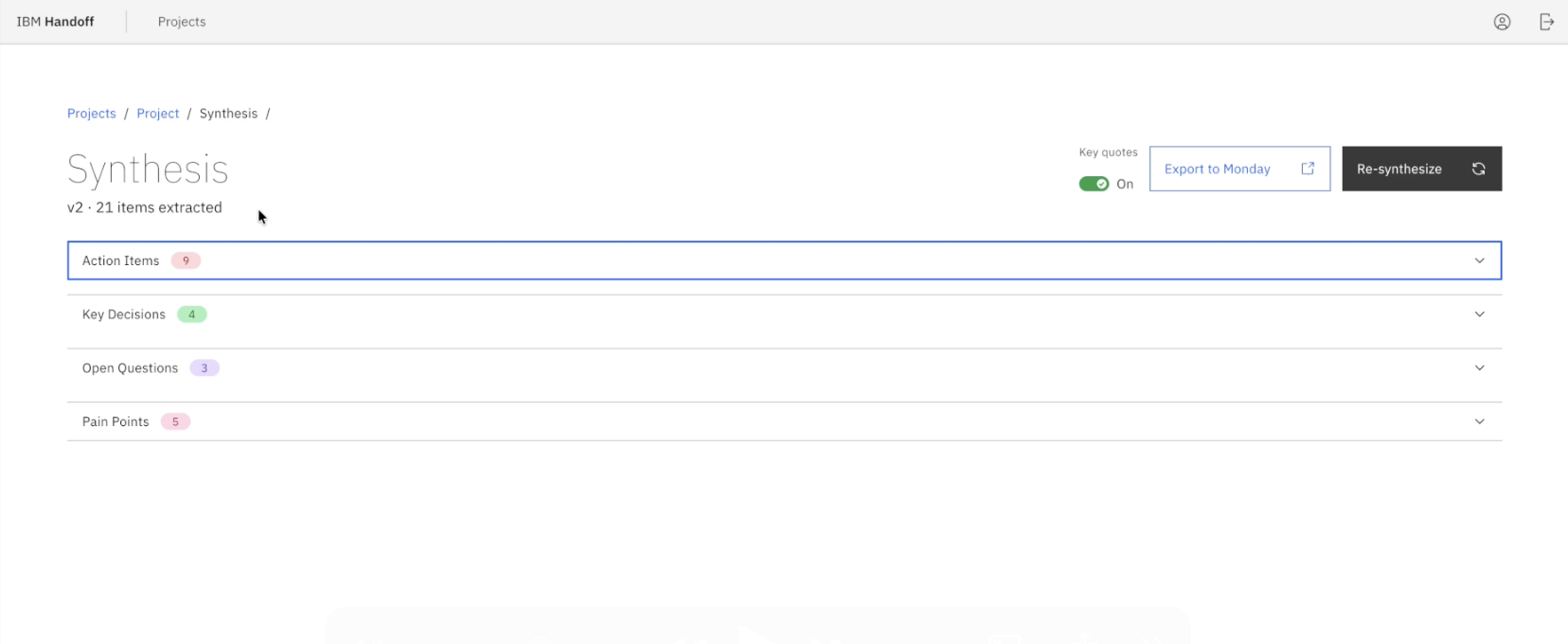
Rather than giving users one opaque summary, Handoff organizes AI output into four actionable sections: action items, key decisions, pain points, and open questions. Users can show supporting quotes inline, edit individual findings, delete items that are not useful, or add their own insights manually.
Versioned synthesis runs make it possible to re-synthesize as new documents arrive while preserving the project’s evolving research trail.
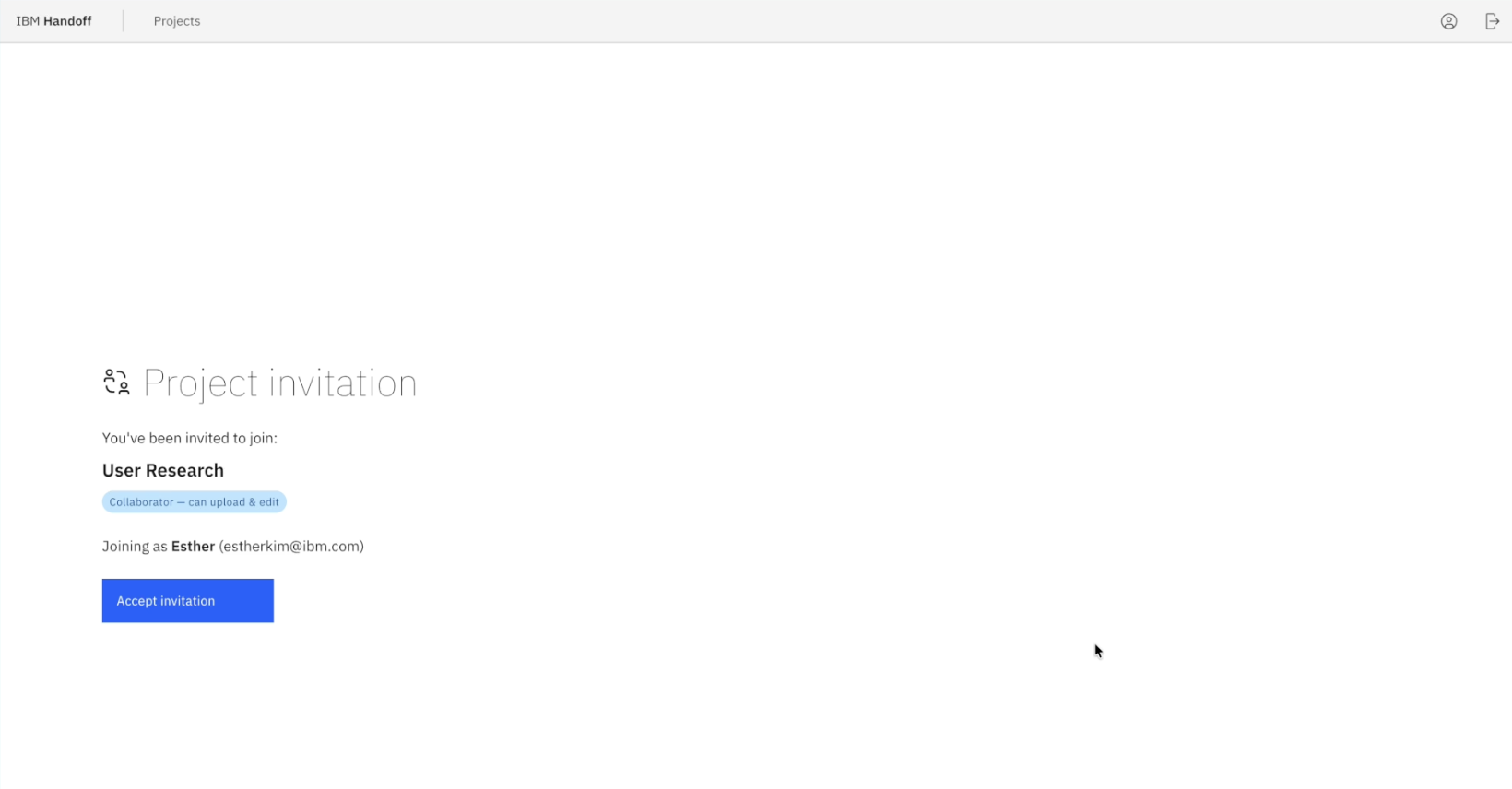
We designed a shared project workflow where multiple people can contribute source documents to one centralized workspace. Teammates join by shareable link, while owner, collaborator, and viewer roles make it clear who can manage the project, contribute research, or review findings.
This turns research from an individual collection of notes into shared project memory—without needing lengthy sync meetings or manual handoffs to make another person’s work usable.
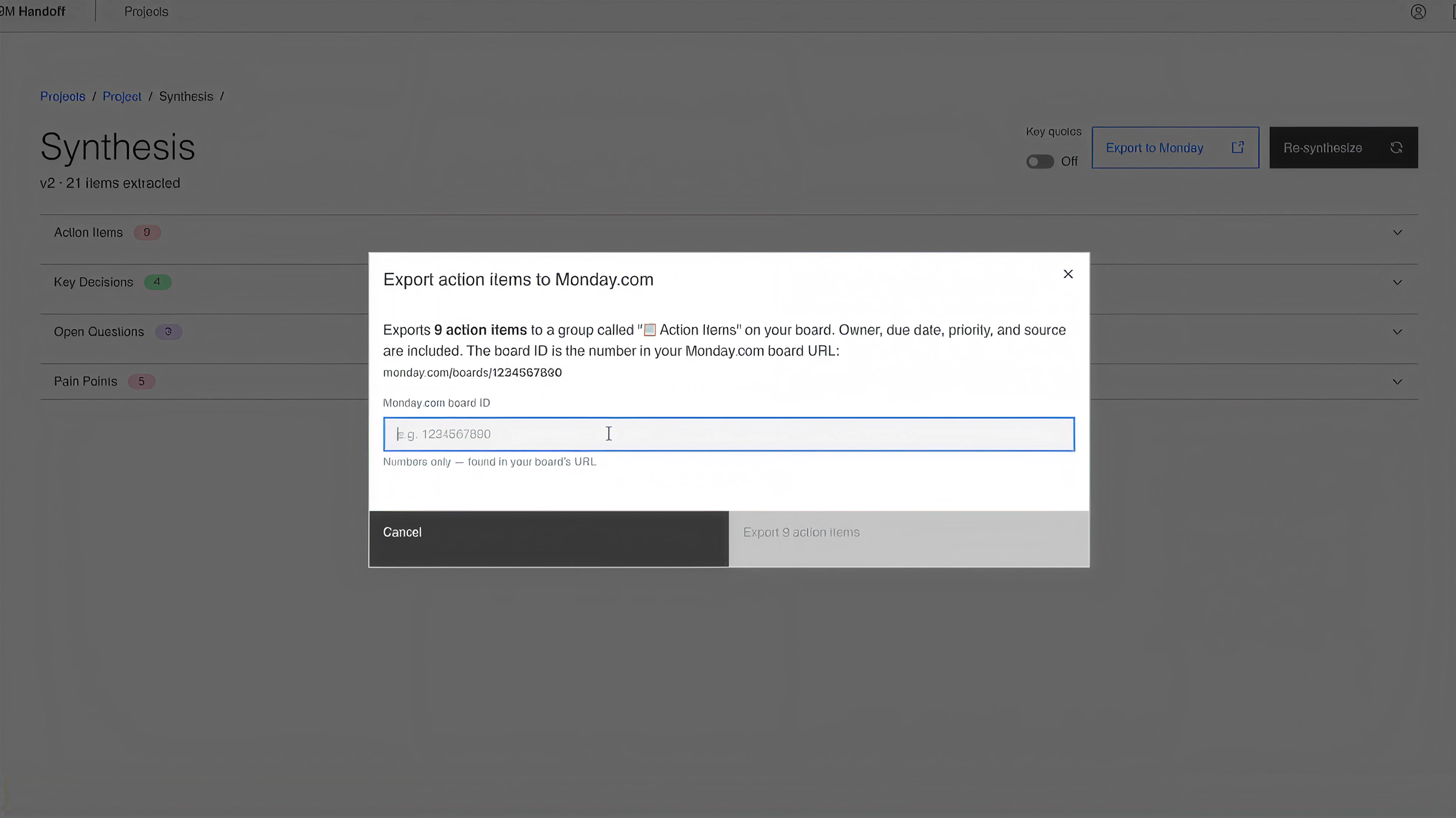
I designed and implemented an export workflow that turns actionable research tasks into a Monday.com board. The export includes priority, owner, due date, and source attribution, directly connecting synthesis to downstream project management.
Teams can also generate a Word report with a cover page, source document list, and colour-coded tables for action items, decisions, pain points, and open questions.
Handoff is a functional full-stack application, not just a concept. The frontend was built with React, Vite, and the Carbon Design System; a Node.js and Express backend supports session-based authentication, project data, file parsing, synthesis, and exports. SQLite provided persistent storage for the project.
Handoff reframed synthesis as a translation problem. The value was not simply generating a summary; it was helping research retain its context as it moved between documents, people, decisions, and tasks. The project strengthened my interest in designing AI experiences that reduce friction while keeping people in control of the judgment and decisions that matter.